
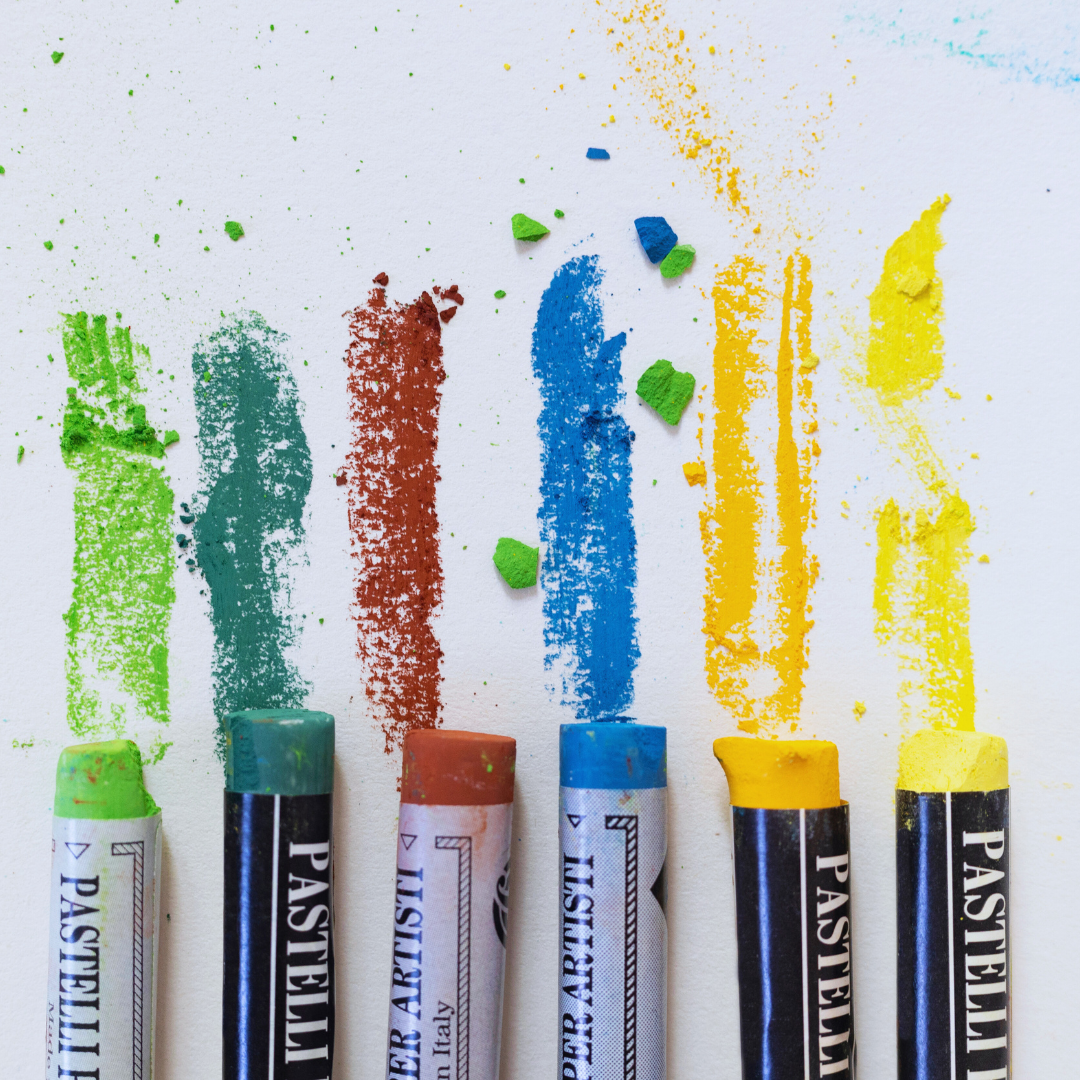
Soft pastels and oil pastels are two popular media that many artists use, but they differ significantly in composition and application. Soft pastels are made from powdered pigment and a minimal binder, resulting in a dry, chalky texture that blends easily. Oil pastels contain pigment suspended in oil and wax, giving them a creamy, smooth consistency that doesn’t smudge as readily.
The main difference lies in texture and blending: soft pastels produce vibrant, blendable colors with a dusty finish, while oil pastels offer a creamy, more durable mark with a glossy surface. Understanding these characteristics can help you choose the right pastel for your style and project.
Whether you seek the delicate softness of chalk or the bold richness of oil, knowing the differences will guide your artistic decisions effectively. This guide breaks down what sets soft and oil pastels apart in detail.
Overview of Soft and Oil Pastels
Soft and oil pastels are two popular mediums used for drawing and painting. Both offer vibrant colors but differ in texture, composition, and application methods. Understanding their characteristics helps in choosing the right medium for specific artistic needs.
What Are Soft Pastels?
Soft pastels are sticks made primarily of pigment, water, and a minimal amount of binder, usually gum arabic or methylcellulose. This composition gives them a dry, powdery texture that allows for easy blending and layering.
They are highly pigmented, offering intense colors in a matte finish. Soft pastels are fragile and can crumble, so they require careful handling and often a fixative after application to prevent smudging.
Artists use soft pastels for detailed work or expressive, loose techniques. Their texture allows for smooth gradations and subtle color transitions.
What Are Oil Pastels?
Oil pastels consist of pigment combined with a non-drying oil and wax binder, giving them a creamy, soft consistency. This makes them less dusty than soft pastels and allows for thicker, more textured applications.
Unlike soft pastels, oil pastels do not blend easily with water but blend well with other oil pastels or tools like palette knives. They usually produce vibrant, glossy colors that retain richness over time.
Oil pastels resist smudging more effectively but may require a fixative or varnish for long-term preservation. They are favored for bold, impasto-like strokes and layering effects.
Brief History and Origins
Soft pastels date back to the 16th century, gaining popularity through artists like Edgar Degas, who explored their ability to replicate delicate textures. Historically, they evolved alongside advances in pigment refinement and binder formulations.
Oil pastels were developed in the 20th century, around the 1920s, by the Japanese company Sakura. They were designed to combine the richness of oil paints with the ease of pastels, quickly becoming popular in modern art education and professional use.
Both mediums reflect evolving artistic needs to balance color vibrancy, ease of use, and surface texture.
Core Differences Between Soft and Oil Pastels
Soft and oil pastels differ significantly in how they’re made, how they feel and handle, and how their colors behave on paper. These differences affect the way artists choose between them for various techniques and effects.
Composition and Ingredients
Soft pastels consist mainly of pigment, a binder (usually gum or methylcellulose), and a small amount of chalk. This composition gives them a dry, powdery feel and allows them to deposit color easily on textured paper.
Oil pastels use pigment combined with non-drying oil and wax as binders. This mixture creates a greasy, creamy texture that doesn’t dry completely. The oil content means oil pastels can be mixed and layered differently from soft pastels.
The binder type strongly influences how the pastels interact with surfaces and each other, determining application methods and durability.
Texture and Consistency
Soft pastels have a crumbly, dusty texture that can create fine dust when applied or blended. They smudge easily and require fixatives to prevent color loss and smearing.
Oil pastels feel creamy and smooth, with a waxy consistency. They apply in thick, solid strokes and hold their shape well, making them less prone to accidental smearing but harder to blend softly.
These tactile differences affect usability. Soft pastels often suit broad, loose strokes, while oil pastels allow for precise, sustained applications.
Color Vibrancy and Blending
Soft pastels display intense, matte colors thanks to their high pigment concentration and chalk base. Their porous texture absorbs light to enhance brightness, but colors can dull if overblended.
Oil pastels offer rich, glossy colors because of their oily binder. Their surface sheen can deepen hues, making colors appear more saturated, especially in thick layers.
Blending varies: soft pastels blend easily using fingers or tools for smooth gradients. Oil pastels blend best with scraping, smearing, or solvent use, producing richer, more textured mixes.
Application Techniques
Applying soft and oil pastels involves distinct approaches to layering, blending, and combining with other media. Each technique highlights differences in texture, drying time, and compatibility that affect the final artwork.
Layering Methods
Soft pastels are ideal for building up layers due to their powdery texture and quick application. Apply light pressure for thin layers and stronger strokes for opacity. Since soft pastels can smudge easily, fixatives are often used between layers to preserve details and prevent unwanted blending.
Oil pastels do not dry completely and remain workable, allowing for continuous reworking. Layering with oil pastels involves pressing firmly to deposit thick, creamy strokes. They can be scumbled—scrubbed lightly over previous layers—to combine colors while maintaining visible texture.
| Aspect | Soft Pastels | Oil Pastels |
| Texture | Powdery | Dense and creamy |
| Layer Build-Up | Light to firm pressure | Firm pressure, possible scumbling |
| Fixative Needed | Often recommended | Rarely necessary |
Blending Approaches
Soft pastels blend smoothly with fingers, blending stumps, or soft cloths. This lets you create seamless gradients or textured illusions. Because they are dry, blending can be layered repeatedly without disturbing previous work too much.
Oil pastels blend differently due to their waxy, oily nature. Tools like palette knives, rags, or even solvents (like mineral spirits) can be used to blend colors. This creates richer, more buttery blends and allows for effects similar to oil painting.
Blending tips:
- Soft pastels: use gentle, circular motions to avoid patchiness.
- Oil pastels: Use cross-hatching or smearing for texture before solvent blending.
Mixing with Other Media
Soft pastels work well with charcoal, graphite, and chalk as they share a dry texture. Paper or canvas with tooth enhances layering and blending. Soft pastels can also be fixed and combined with watercolor washes beneath for mixed media pieces.
Oil pastels interact differently due to their oily base. They can be layered over acrylic paint without cracking, but are less compatible with watercolors. They mix effectively with oil paints and can be diluted with solvents for glazing or thin washes.
A quick compatibility outline:
| Media Type | Soft Pastels Compatibility | Oil Pastels Compatibility |
| Charcoal/Graphite | High | Limited |
| Watercolors | Underlayers preferred | Not recommended |
| Acrylics | Can layer over fixed pastels | Good for layering |
| Oil Paints | Not compatible | Compatible |
Surface Compatibility
Both soft and oil pastels require specific surfaces to perform effectively. Their texture, absorption, and adherence vary depending on the material used.
Ideal Surfaces for Soft Pastels
Soft pastels work best on textured, toothy surfaces that can hold their powdery pigment. Papers with a rough or sanded surface, such as pastel paper or textured watercolor paper, are preferred.
The grain allows the pigment to grip the surface, enabling easier layering and blending. Heavily textured papers like Canson Mi-Teintes or UArt are common choices. Soft pastel artists often use art boards with a velvety or textured finish as well.
Smooth papers are less effective because the pigment slides off, making it hard to build color intensity. Fixatives are often applied to hold soft pastels in place on these porous surfaces.
Best Surfaces for Oil Pastels
Oil pastels perform well on less absorbent, smoother surfaces than soft pastels. Heavyweight paper such as Bristol board, canvas, or even primed wood panels provides good support for thick applications.
The waxy and oily nature of oil pastels allows them to adhere to both rough and smooth surfaces. For example, primed canvas holds pigment well and allows for blending and scraping techniques.
Non-porous surfaces like glass or metal can also be used, but require special handling because the pigment does not absorb. Oil pastels can be layered on top of grounds like gesso or acrylic mediums to improve grip and longevity.
Longevity and Preservation
The lifespan and maintenance of pastel artworks depend heavily on how they are treated after completion and the inherent properties of the materials. Understanding the best practices for preservation helps maintain the quality and appearance of soft and oil pastel pieces.
Fixatives and Finishing
Soft pastels require the application of fixatives to reduce smudging and particle loss. Spray fixatives designed specifically for pastels create a protective layer without significantly altering color vibrancy. Multiple light coats are recommended, allowing drying time between applications.
Oil pastels generally do not require fixatives because their waxy, oily binder holds pigment firmly in place. However, applying a varnish can protect oil pastel works from dust and dirt and improve surface durability. Use varnishes formulated for oil-based media to avoid discoloration or cracking.
Lightfastness and Durability
Soft pastels vary in lightfastness depending on pigment quality. Professional-grade soft pastels often use high-quality pigments with better resistance to fading, while student-grade options may fade more quickly under strong light exposure.
Oil pastels tend to have stable pigments encased in wax and oil, offering good overall durability. That said, exposure to UV light can still cause some fading over time. Both types benefit from display in low light and use of UV-protective glass or acrylic when framed.
| Property | Soft Pastels | Oil Pastels |
| Fixative required? | Yes, to reduce smudging | No, but varnish is optional |
| Best protective layer | Spray fixative for soft pastels | Varnish formulated for oils |
| Typical lightfastness | Varies by pigment quality | Generally good |
| Durability | More fragile, vulnerable to smudging | Firmer, less prone to surface damage |
Ease of Use and Cleanup
Soft and oil pastels differ in how they feel during use and how straightforward the cleanup is afterward. These factors impact their suitability depending on the project or workspace.
Handling and Smudging
Soft pastels offer a powdery texture that applies smoothly but produces significant dust and smudging. Their fragile sticks crumble easily, requiring gentle pressure. This makes blending with fingers or tools simple, but also increases the chance of unintended smears.
Oil pastels have a waxy, greasy consistency that grips the surface firmly. They do not smudge easily once applied, allowing for sharper lines. However, blending requires more effort or solvents since they don’t break down like soft pastels.
Both types demand careful handling; soft pastels need frequent cleaning of hands and tools to prevent color mixing, while oil pastels can transfer wax onto surfaces but not as messily.
Cleaning Tools and Surfaces
Soft pastels create a fine dust that settles on palettes, paper edges, and workspaces. Cleanup involves gentle brushing or wiping with a dry cloth to avoid spreading the pigment further. Using fixatives after work helps lock colors and reduce future dust problems.
Oil pastels leave waxy residues that are harder to remove with standard erasers or cloths. Solvents like turpentine or mineral spirits may be necessary to clean tools or fix unwanted marks. Surfaces like glass or plastic require wiping with solvent to remove oily buildup.
In both cases, using dedicated pastel sets, palettes, and protective coverings reduces cleanup time and keeps workspace conditions manageable.
Common Uses and Artistic Styles
Soft and oil pastels each support distinct artistic methods that suit different creative goals. Soft pastels excel in blending and layering for subtle effects. Oil pastels are favored for bold, textured marks and vibrant color application.
Popular Techniques with Soft Pastels
Soft pastels are often used for blending to create smooth gradients and delicate transitions. Artists can smudge colors with fingers, blending stumps, or cloth to create soft edges.
They are ideal for layering. Multiple layers build depth and detail, especially in portraits and landscapes. Soft pastels allow fine control over shading and highlights due to their powdery texture.
Common techniques include hatching and cross-hatching for shading and texture. Soft pastels also work well in dry application, allowing artists to manipulate color intensity gradually.
Expressive Approaches with Oil Pastels
Oil pastels excel at producing thick, textured strokes that retain their shape on paper. Artists often use them in a heavier, more gestural style with visible marks.
They are suited for impasto techniques similar to oil painting, where layers pile up to form texture. Artists may also blend oil pastels using solvents or fingers for smooth transitions, though blending is less subtle than with soft pastels.
Oil pastels hold vibrant pigments and resist smudging once dry, making them popular for bold, graphic work and experimental art styles.
Health, Safety, and Environmental Considerations
Both soft and oil pastels can pose health risks if not handled properly. They often contain pigments that may include heavy metals like cadmium, cobalt, or chromium. Prolonged exposure to dust or ingestion should be avoided.
Using pastels in a well-ventilated area is important. Dust from soft pastels can become airborne and irritate the respiratory system. Wearing a dust mask while blending or erasing can reduce inhalation risks.
Oil pastels have a waxy or oily binder, which creates less dust but can cause skin irritation for sensitive users. Washing hands after use helps prevent accidental ingestion or skin issues.
Dispose of pastel waste responsibly. Avoid rinsing pastel dust or scraps directly into water systems, as some pigments can be harmful to aquatic life. Check local guidelines for hazardous art material disposal.
| Aspect | Soft Pastels | Oil Pastels |
| Dust Production | High | Low |
| Respiratory Risk | Moderate to High | Low |
| Skin Contact | Minimal irritation risk | Possible irritation |
| Environmental Impact | Potential pigment runoff | Potential pigment runoff |
Safe handling practices and awareness of materials help minimize health and environmental impacts when using both types of pastels.
Choosing Between Soft and Oil Pastels
When deciding between soft and oil pastels, consider the texture and blending you want. Soft pastels offer rich, powdery colors that blend smoothly but can be messier to work with. Oil pastels are creamier, less dusty, and provide a different finish, often more vibrant and glossy.
Think about the surface you will use. Soft pastels generally require textured paper to hold the pigment well. Oil pastels work on a wider variety of surfaces, including paper, canvas, and even wood, because of their oily consistency.
Use the table below to compare key factors:
| Factor | Soft Pastels | Oil Pastels |
| Texture | Powdery, dry | Creamy, oily |
| Blending Style | Smooth, easily smudged | Blends but less smooth |
| Surface Needs | Textured paper recommended | Versatile surfaces |
| Durability | Fragile, requires fixative | More resilient, less dust |
| Cleanup | Dust can be messy | Cleaner, but oily residue |
Consider your working style as well. If you prefer clean and controlled strokes, oil pastels may suit you better. For expressive, layered work with subtle transitions, soft pastels might be the choice.
Experimenting with both types on small projects can clarify which one fits your artistic goals and preferences best.